


Autonomous TDD agent system for Claude Code, Cursor, Gemini CLI, GitHub Copilot, and Antigravity.
SAM orchestrates a team of specialized AI agents that transform an idea or PRD into working, tested code using strict Test-Driven Development (RED-GREEN-REFACTOR). Don't have a PRD yet? Start with quick-prd (one-pass draft) or scope (full discovery) — SAM will help you draft one.
See it work — sam-agents/example-todo
A working todo app built by SAM in 14 minutes from a single markdown PRD. Every artifact is committed: PRD, contracts, stories, source, tests, and the post-integration screenshots + network log + video that Lens captured. Browse it in 90 seconds to see exactly what SAM produces.
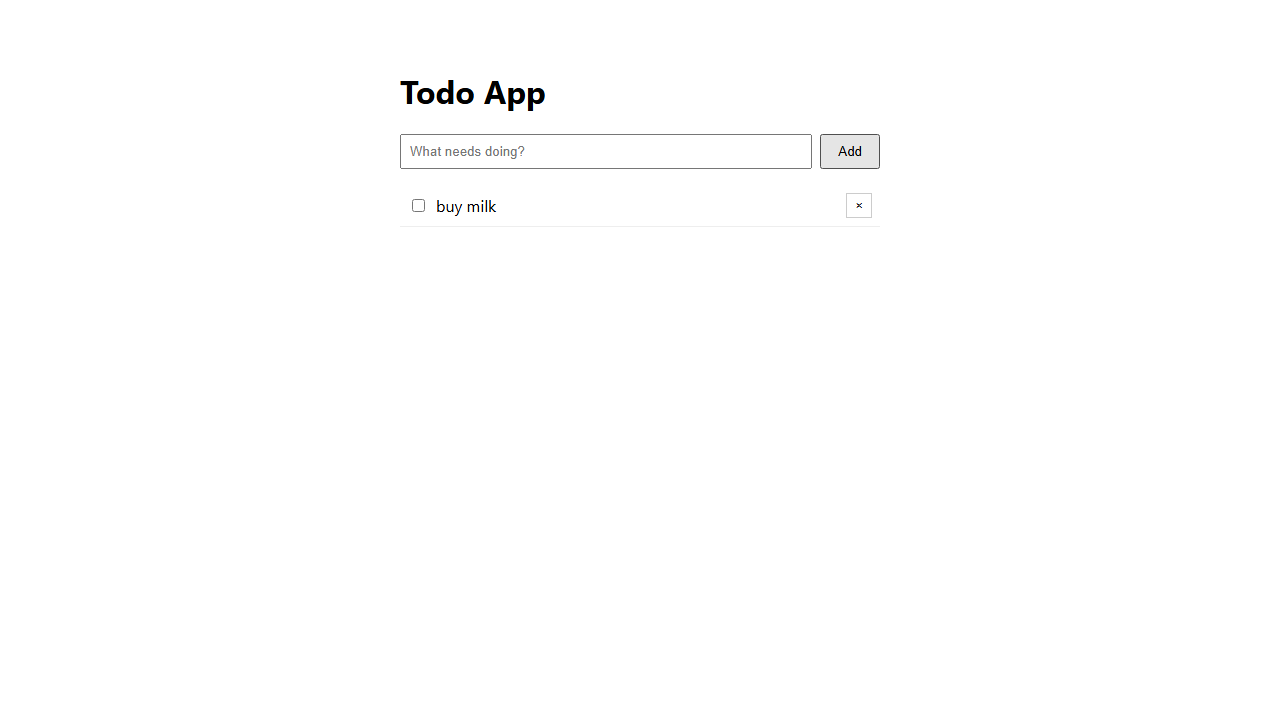
Three things, ranked by how much they save you.
Every cross-file seam (API endpoint, shared type, repo interface, event shape) is a typed markdown contract that Atlas writes before any story is generated. Stories declare which contracts they produces and consumes. When the frontend imports a type the backend produces, TypeScript enforces it across the codebase. Integration drift becomes a compile error, not a Friday-night incident. See sdocs/contracts/ in the example.
Agent roles enforce RED → GREEN → REFACTOR. Titan writes failing tests for every acceptance criterion. Dyna writes the minimum code to pass them. Argus refactors against quality rules. No agent can shortcut. If you've watched AI write tests after the code, this is the opposite.
After the per-epic integration story passes, Lens drives a real headless Chrome end-to-end. Video, per-milestone screenshots, network log, console log — all committed to sdocs/evidence/. The agents do not say "I tested it." The files on disk say it. See sdocs/evidence/EPIC-001/ in the example.
npx sam-agents demoScaffolds sam-agents/example-todo into ./sam-demo — a working todo app SAM built from a PRD, with every artifact (contracts, stories, source, tests, Lens evidence) on disk. Browse the files, run npm install && npm run dev, open sdocs/evidence/EPIC-001/report/index.html for the Playwright trace. The fastest way to see what SAM actually produces.
# Interactive mode (choose your platform)
npx sam-agents

# Or specify platform directly
npx sam-agents --platform claude       # Claude Code
npx sam-agents --platform cursor       # Cursor IDE
npx sam-agents --platform antigravity  # Google Antigravity
npx sam-agents --platform gemini       # Gemini CLI
npx sam-agents --platform copilot      # GitHub Copilot
npx sam-agents --platform all # All platforms| Platform | Install Command | Skill Format |
|---|---|---|
| Claude Code | npx sam-agents --platform claude |
/sam: commands |
| Cursor | npx sam-agents --platform cursor |
@agent mentions |
| Gemini CLI | npx sam-agents --platform gemini |
.gemini/skills/ |
| GitHub Copilot | npx sam-agents --platform copilot |
copilot-integration/ |
| Antigravity | npx sam-agents --platform antigravity |
/sam- skills |
| SAM | Cursor agents | Cline / Continue | Aider | Claude Code skills | Copilot Workspace | Devin | |
|---|---|---|---|---|---|---|---|
| TDD enforced by agent roles | Yes | No | No | Optional | No | No | No |
| PRD as input artifact | Markdown | No | No | No | No | Spec | Task |
| Typed contracts between stories | Yes | No | No | No | No | No | No |
| Post-integration evidence (video, network, console) | Lens | No | No | No | No | No | No |
| Bring Your Own Agent (BYOA) | Your subscription | Cursor | Multi-provider | Multi-provider | Claude | Copilot | Hosted, paid |
| Multi-IDE / CLI parity | 5 platforms | 1 | 2 | CLI | 1 | 1 | Web |
| Markdown protocol (auditable artifacts) | Yes | No | No | No | No | No | Partial |
SAM is the only one of these that treats integration as a first-class artifact and produces evidence you can ship to a stakeholder.
13 specialists with narrow lanes — specialization over generality. Each agent's full persona lives in _sam/agents/.
| Agent | Role |
|---|---|
| SAM | Orchestrator — runs the whole pipeline |
| Quill | Product Manager — drafts a quick-PRD in one pass with explicit assumptions |
| Iris | UX Designer — drives scope discovery + UI review during build |
| Atlas | System Architect — designs typed contracts before stories |
| Titan | Test Architect — writes failing tests for every AC (RED) |
| Dyna | Developer — minimum code to make tests pass (GREEN) |
| Argus | Code Reviewer — adversarial review + refactor (REFACTOR) |
| Cosmo | CSS Reviewer — styling consistency (web only) |
| Aria | Accessibility Reviewer — semantics, keyboard, contrast (web only) |
| Sentinel | Security Reviewer — secrets, CVEs, secure coding (opt-in) |
| Upkeep | Dependency Maintenance — on demand |
| Sage | Technical Writer — changelogs and release notes |
| Lens | Demo Recorder — real-browser video + screenshots + network + console after integration (web only) |
Per-platform invocation is in the Invocation per platform table below.
SAM ships six composable workflows. Run any of them on its own, or use plan-n-build for the one-shot experience (add --from-idea if you don't have a PRD yet).
| Workflow | Goal | Output |
|---|---|---|
| quick-prd | Idea → draft PRD in one pass (Quill, with explicit assumptions for unstated details) | sdocs/prd.md (+ ## Assumptions) |
| scope | Idea, rough notes, or nothing → PRD via full UX + technical discovery | sdocs/prd.md (+ ## Open Questions) |
| plan | Validate a PRD, design contracts, decompose into epics and stories | sdocs/contracts/, sdocs/epics/, sdocs/stories/, sdocs/architecture-ref.md |
| build-tdd | Implement a single story via RED-GREEN-REFACTOR + conditional review + Lens demo for the integration story | Working code, tests, changelog entry, sdocs/evidence/ for integration stories |
| plan-n-build | Compose plan + build-tdd over every story + comprehensive docs | Full project + docs/features/ + release notes |
| extend | Add features to an existing project after v1 — evolves contracts (with version bumps), appends stories, merges the addendum into prd.md |
New contracts/stories appended, prd.md change log updated |
Typical flow: quick-prd or scope → plan → build-tdd (manual stepping), or plan-n-build end-to-end. With --from-idea, plan-n-build prepends scope automatically (non-interactive). Iterate after v1 with extend.
Both produce a valid PRD conforming to prd-schema.md. They differ in how they handle unknowns.
quick-prd (Quill) |
scope (Iris + Atlas + Sage) |
|
|---|---|---|
| Discovery depth | 0–5 focused questions | Full UX + technical Q&A |
| Unknown handling | Default + label as Assumption | Capture as Open Question |
| Time | Minutes | Working session |
| Best for | "Give me a starting PRD I can react to" | "Let's work this out properly" |
Quick-PRD's ## Assumptions block lets you scan the defaults and reject any that are wrong in seconds. Scope's ## Open Questions block surfaces things the discovery loop couldn't resolve.
| Platform | quick-prd | scope | plan | build-tdd | plan-n-build | extend |
|---|---|---|---|---|---|---|
| Claude Code | /sam:core:workflows:quick-prd <idea> |
/sam:core:workflows:scope <idea> |
/sam:core:workflows:plan <prd> |
/sam:core:workflows:build-tdd <story> |
/sam:core:workflows:plan-n-build <prd> |
/sam:core:workflows:extend <addendum> |
| Cursor | @sam-quick-prd |
@sam-scope |
@sam-plan |
@sam-build-tdd |
@sam-plan-n-build |
@sam-extend |
| Gemini CLI | sam-quick-prd |
sam-scope |
sam-plan |
sam-build-tdd |
sam-plan-n-build |
sam-extend |
| GitHub Copilot | Run sam-quick-prd |
Run sam-scope |
Run sam-plan |
Run sam-build-tdd |
Run sam-plan-n-build |
Run sam-extend |
| Antigravity | /sam-quick-prd |
/sam-scope |
/sam-plan |
/sam-build-tdd |
/sam-plan-n-build |
/sam-extend |
For each story, in order:
- RED — Titan writes failing tests covering every acceptance criterion
- GREEN — Dyna writes the minimum code to make tests pass, then verifies the build
- REFACTOR — Argus runs an adversarial review and auto-fixes issues
- UI — Iris validates UX against design standards (web apps only)
- CSS — Cosmo checks styling consistency (web apps only)
- A11y — Aria reviews semantics, keyboard, and contrast (web apps only)
- Security — Sentinel audits secrets, CVEs, and secure coding (opt-in via
--security) - Docs — Sage appends a changelog entry for the story
After all stories in an epic are done, the integration story runs the whole epic against real HTTP — no mocks. Once it passes, Lens drives a real headless Chrome and captures the demo (video + screenshots + network + console) into sdocs/evidence/<EPIC-ID>/. The integration story is the gate; Lens proves it on disk.
Story status (in YAML frontmatter: ready → in-progress → done / blocked) is the single source of truth. Interrupted runs resume cleanly with plan-n-build --resume.
your-project/
├── _sam/                      # Agent and workflow definitions (shared across platforms)
│   ├── agents/                # Atlas, Titan, Dyna, Argus, ...
│   ├── core/agents/           # SAM orchestrator
│   ├── core/resources/        # prd-schema, story-schema, epic-schema, design defaults
│   └── core/workflows/        # quick-prd/, scope/, plan/, build-tdd/, plan-n-build/, extend/
├── .claude/commands/sam/      # Claude Code slash commands
├── .cursor/rules/             # Cursor @mention rules
├── .gemini/skills/            # Gemini CLI skills
├── copilot-integration/       # GitHub Copilot instructions
└── .agent/skills/             # Antigravity skills
Workflows write their output to sdocs/ in your project root (prd.md, epics, stories, architecture refs, run reports). This is generated content — not installed by the CLI.
- Node.js 16+
- One of:
We welcome contributions! See CONTRIBUTING.md for guidelines.
MIT - see LICENSE for details.
Built with AI. Powered by TDD.