








AN INTRODUCTION · FROM IDEAS TO ENGINEERING
I am Martin — a software engineer and product builder working across
AI systems, industrial automation, backend reliability, security, and native applications.
I like to understand the person before the problem,
the failure modes before the launch,
and the details that turn a prototype into a product people can trust.
Computer science · Engineering and product experience at SAP · Open-source development
Selected products · Engineering · More work · My approach
CHAPTER I / PRODUCT ENGINEERING
Different domains. One conviction: useful technology should feel intentional.
|
01 / INDUSTRIAL ROBOTICS From a human demonstration to a robot task worth reviewing. A browser-based robotics workspace for teaching tasks, visualizing robot motion, and exploring reach, payload, and hardware compatibility. The compelling question is not simply “Can a robot do this?” but “What evidence makes it safe to proceed?” The engineering: task-version fingerprints, qualified-review checkpoints, an append-only demo audit history, and approval invalidation when the task changes.
|
02 / NATIVE IOS A quieter way to make progress. A personal iPhone companion for goals, journaling, planning, and focus. Built around local data, thoughtful SwiftUI interactions, notification services, and widgets. The engineering: SwiftData persistence, MVVM/repository boundaries, and on-device operation.
|
|
03 / AI SOFTWARE ENGINEERING Automation should earn the right to change your code. A local-first coding-agent research project organized around discovery, architecture, implementation, review, and verification. The engineering: isolated worktrees, explicit permission tiers, repository maps, and optional independent verification before applying changes.
|
04 / WRITING TOOLS Change the voice. Keep the meaning in view. A writing workspace with tone controls, sentence-level comparisons, rewrite strength, and meaning-preservation warnings. The engineering: a Next.js studio, Go API, Python AI service, and local/provider-adapter options.
|
Product truth matters: Aurevix is not a certified robot deployment system; Martinus Mobile remains local-first; OpenRewrite's meaning checks are warnings, not guarantees.

CHAPTER II / THE SYSTEMS BEHIND THE EXPERIENCE
Reliability is rarely the first thing you see. It is what lets everything else hold.
|
BACKEND RELIABILITY · GO Designing for the moment a worker crashes, a request repeats, or two processes race. A job-processing lab exploring idempotency, leases, retry policy, PostgreSQL state, and recoverability. Real-database durability certification remains pending. |
AGENT SUPERVISION · TYPESCRIPT Inspect and supervise coding-agent tasks from a local dashboard. Authenticated APIs, persistent SQLite task history, reports, and scoped MCP tooling make agent work more understandable. Local, read-only prototype; live tunnel integration is not claimed. |
|
NATIVE PERFORMANCE · SWIFT + RUST A local-first macOS media experience: SwiftUI on the surface, a Rust core for scanning, search, and audio-oriented workflows beneath it. Explores native UI, FFI boundaries, and local ownership of content. |
SECURE AGENT INTEGRATIONS · GO + RUST An integration gateway MVP exploring permissions, revocation, human approvals, and an auditable control plane for agent-initiated tool calls. External SaaS connector execution remains stubbed in the MVP. |
More engineering tools — and the decisions behind them
RepoPulse — A read-only GitHub API CLI with bounded pagination, issue/PR analysis, JSON output, and offline tests.
NerveOS — Agent integration architecture investigating scoped context, auth boundaries, and governance.
Forever-Memory — Persistent memory, time-travel queries, and cryptographically signed context-sharing concepts.
Symphony-OS — Agent orchestration and scheduling architecture with an exploratory control plane.
CHAPTER III / CURIOSITY AT WORK
Some projects solve a defined problem. Others begin with a question worth exploring.
|
DESIGN & PRODUCT EXPERIMENTS A beautifully detailed concept for equine monitoring: dashboards, simulated vital signs, personal baselines, alerts, and an optional contextual AI assistant. Frontend demo only — no real sensors or clinical monitoring. |
OPEN-SOURCE EXPLORATION My fork of the ArtCraft community's SoundCraft project: an ambitious Rust digital audio workstation and a fascinating codebase for audio, mixing, and MIDI systems. Upstream project by the community; this fork does not establish authored contributions. |
More public repositories, arranged by discipline
AI infrastructure: NerveOS · Forever-Memory · Symphony-OS
Security: Deepfake-Verify · RED-HIVE
Native & creative: Whisper Page · ApertureOS
Enterprise products: Encora · SentinelClaims · AutonomIQ Procurement
View all public repositories → · Explore forks separately →
Repositories range from exploratory foundations to more developed applications. Individual READMEs document scope and known limitations.
Selected visual notes — screenshots from the repositories
Aurevix · Teaching and simulation viewport
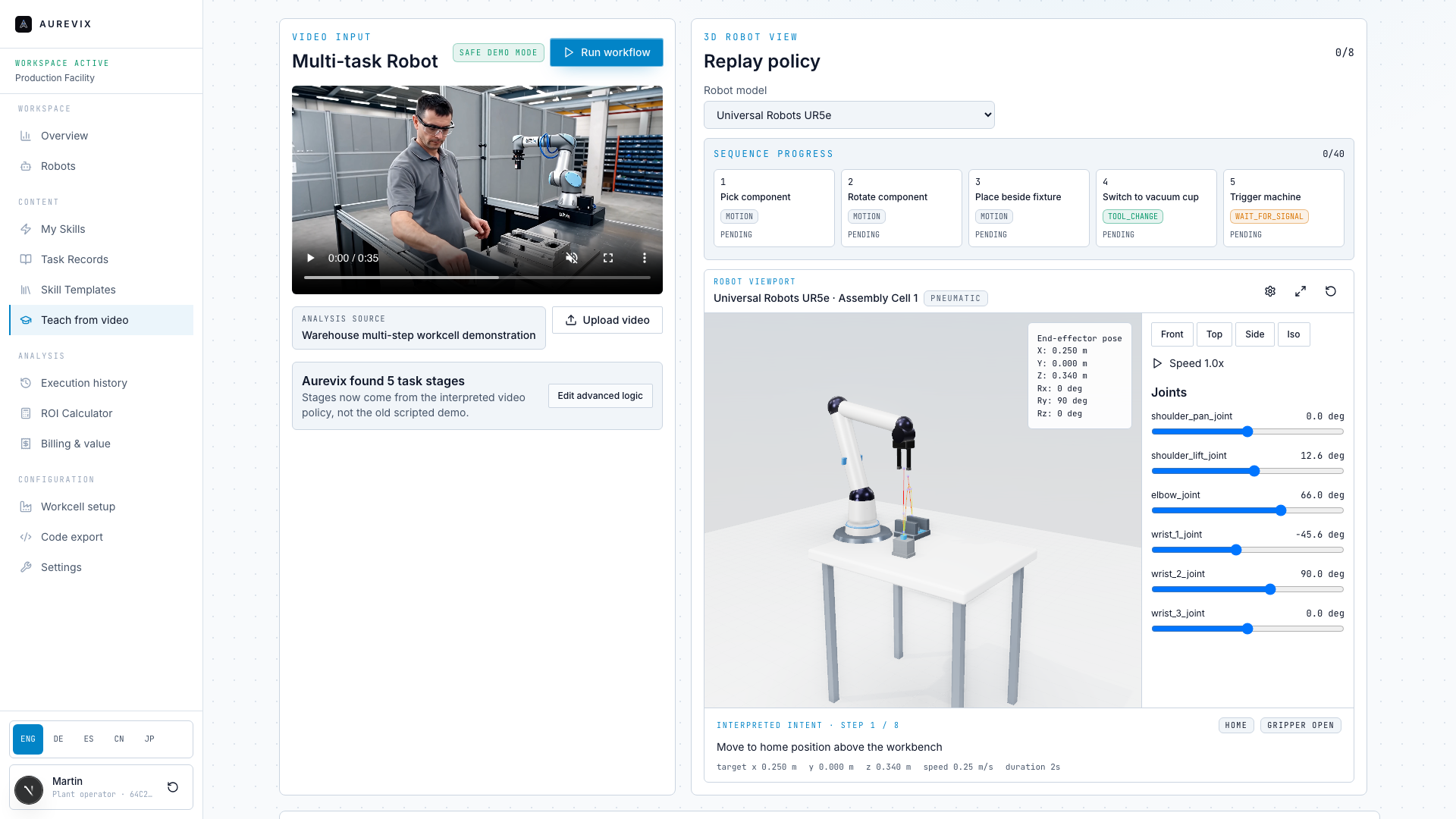
Product screenshots appear here rather than at the top, so the profile opens with the story instead of a gallery.
AND THE WORK THAT ISN'T PUBLIC
Some of my work remains in private repositories. I can discuss the product challenges without exposing code, customer details, or confidential designs.
Finance operations · Field-service intelligence · Engineering-document QA
Camera experiences · Collaborative marketing workflows
These are portfolio-level summaries, not claims of public source availability or production deployment.
CHAPTER IV / THE CRAFT
Good engineering is both discipline and imagination.
|
Understand who needs the solution and what a good outcome actually looks like. |
Retries, authorization, auditability, partial failures, and recovery are product features too. |
|
Use tests, clear contracts, traces, and honest limits. Confidence should be earned. |
Care about the experience as much as the architecture behind it. |
If you're working on ambitious products, reliable backend systems, or responsible AI,
I'd enjoy exchanging ideas.


Designed as a readable portfolio first. Decorative animations add atmosphere; every link and section remains usable without them.