Riven | Debrid Wiki #79

Description





Riven is under active development, expect breaking changes and bugs.
Riven is an advanced media management and streaming solution designed to integrate with various media servers and third-party services. It automates the process of finding, downloading, and organizing media content, making it instantly available for streaming through your preferred media server.
Riven streamlines your media consumption experience by:
- Automatically discovering new content based on your preferences and watchlists.
- Efficiently searching for and downloading high-quality media files.
- Organizing your media library using a smart symlink system.
- Seamlessly integrating with your chosen media server for immediate streaming access.
- Providing a user-friendly web interface for easy management and configuration.
Whether you're a casual viewer or a media enthusiast, Riven offers a powerful, automated solution to keep your media library up-to-date and easily accessible.
Before installing Riven, ensure you have the following prerequisites:
Currently only Real-Debrid, All-Debrid and Torbox are supported. More services will be added in the future.
Before we begin, we need to set up the required folders and files for Riven.
Clone repository and create folders
riven folder consists of data folder and docker-compose.yml file which will be used later.
...other files and folders
Setup Library folder
What is Library folder?
Library folder is the folder where Riven will store movie/show files and symlinks. These point to the actual files on the rclone mount
For this example, we are assuming /mnt/zurg is the rclone mount path.
docker-compose.yml file is used to run Riven in a containerized environment. It consists of three services:
riven: The main Riven application.riven-frontend: The web interface for Riven.riven-db: The database for Riven.
docker-compose.yml
Now this won't work as is, you need to modify the docker-compose.yml file to match your setup.
- Change
TZto your timezone. - Change
ORIGINto the URL you will be accessing the web interface from. For example, if you are planning to run Riven onhttps://riven.example.com, change it tohttps://riven.example.com. This is not required if you are running riven behind a reverse proxy likenginx,caddy,cosmosetc. - Change
BACKEND_URLto the URL where the frontend can access the backend. This is not required here as we are running both frontend and backend in the same network (stack). - Change
RIVEN_DATABASE_HOSTto the URL where the backend can access the database. This is not required here as we are running both backend and database in the same network (stack). - Change
DIALECTandDATABASE_URLto use the same database as the backend. This is not required here as we are running both backend and database in the same network (stack). - Change
volumesto match your setup. Riven requires access to the library folder and rclone mount path.
To run Riven, execute the following command:
This command will start the Riven services in the background. You can access the Riven web interface by navigating to the specified ORIGIN URL or reverse proxy URL.
Once Riven is running, you can configure it by accessing the web interface. You will be prompted with onboarding steps to set up your debrid service, media server, content services and scraper services.
There are 4 steps in the onboarding process:
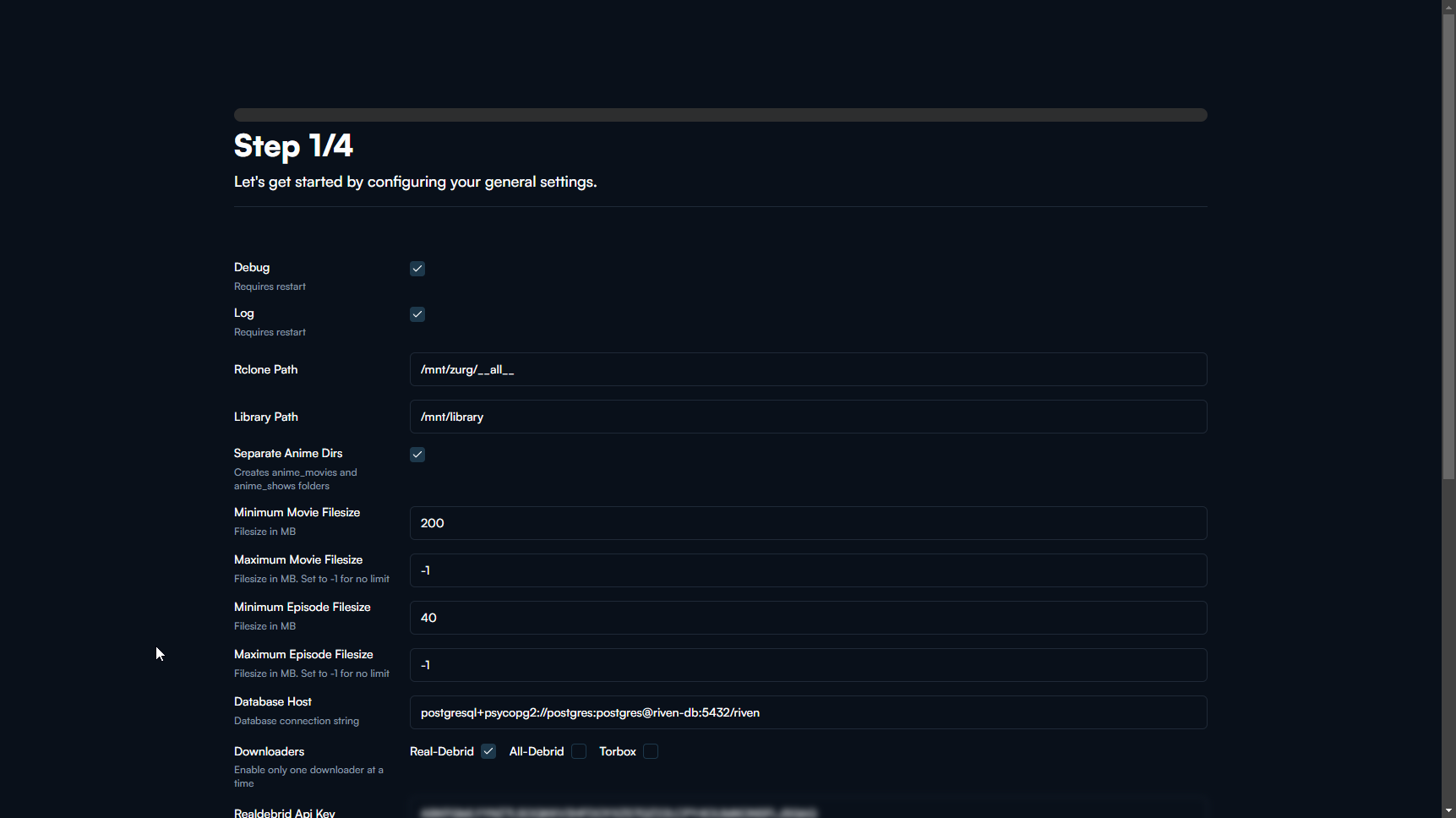
General Settings
In this step you configure the downloaders (debrid services), rclone mount path, library path, subtitles, etc. See the image below for an example.
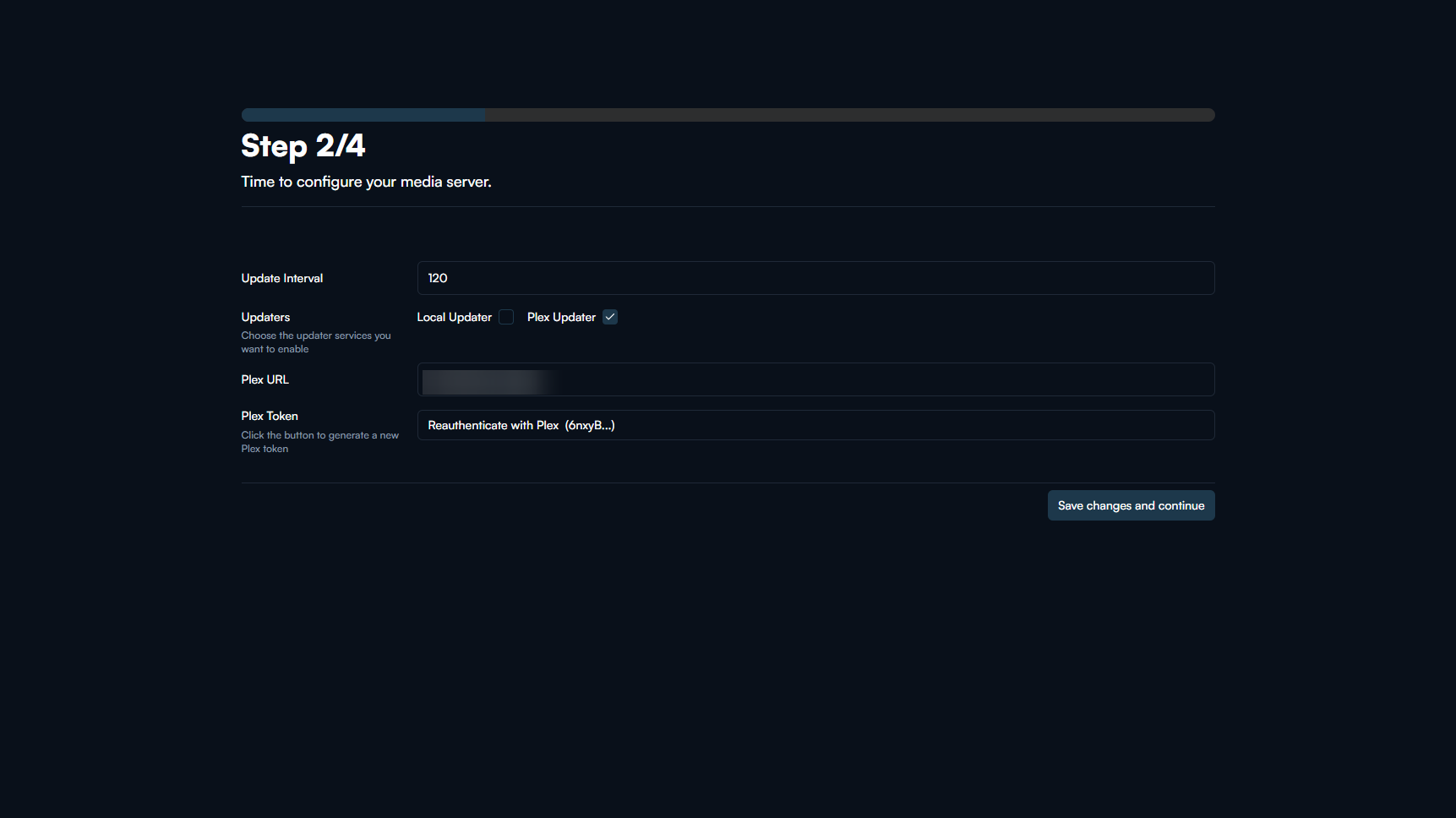
Media Server
In this step you configure the media server and updater settings. See the image below for an example.
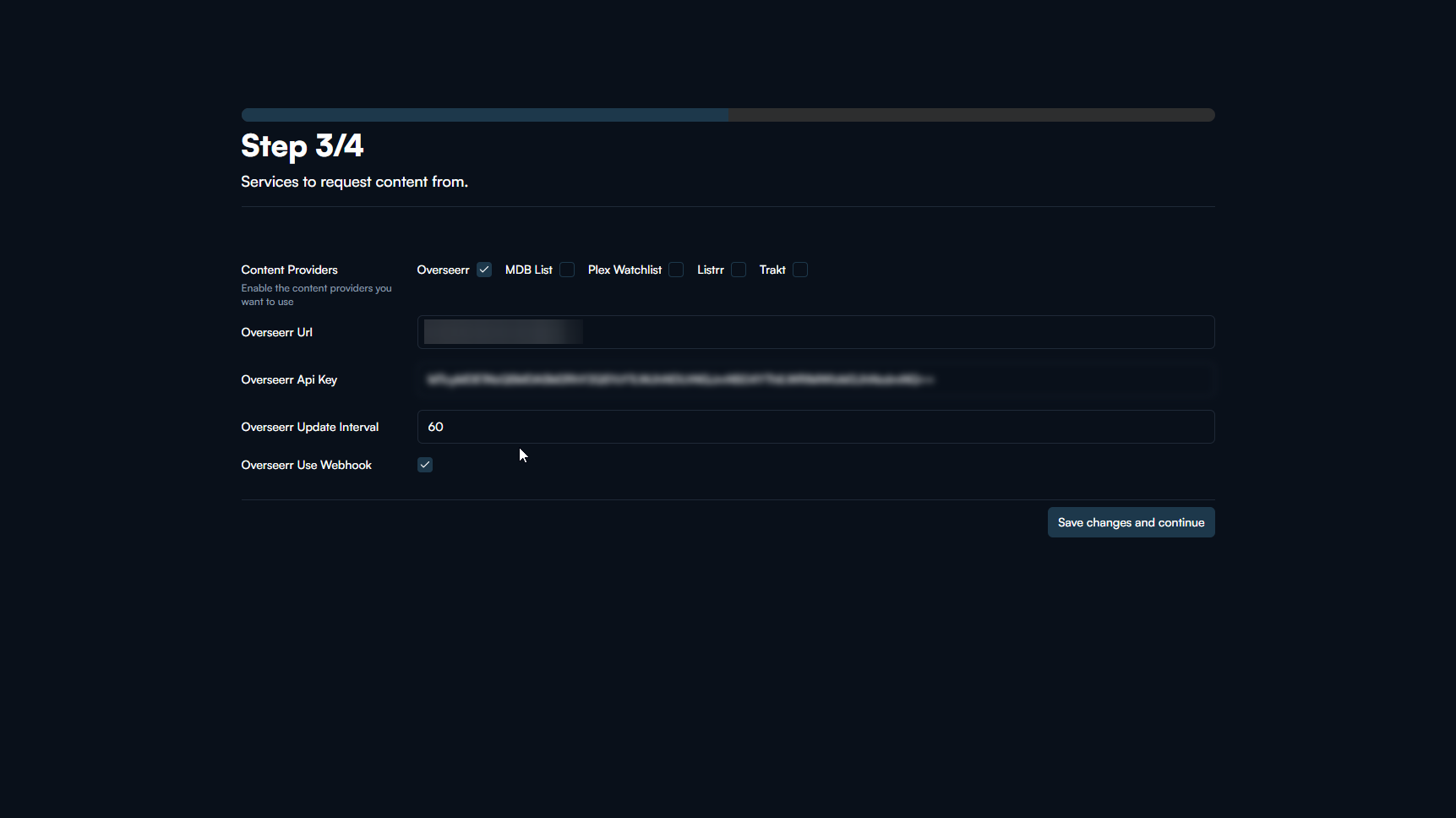
Content Services
In this step you configure the content services like trakt, overseerr, etc. See the image below for an example.
Scraper Services
In this step you configure the scraper services like torrentio, zilean, prowlarr, jackett, etc. See the image below for an example.

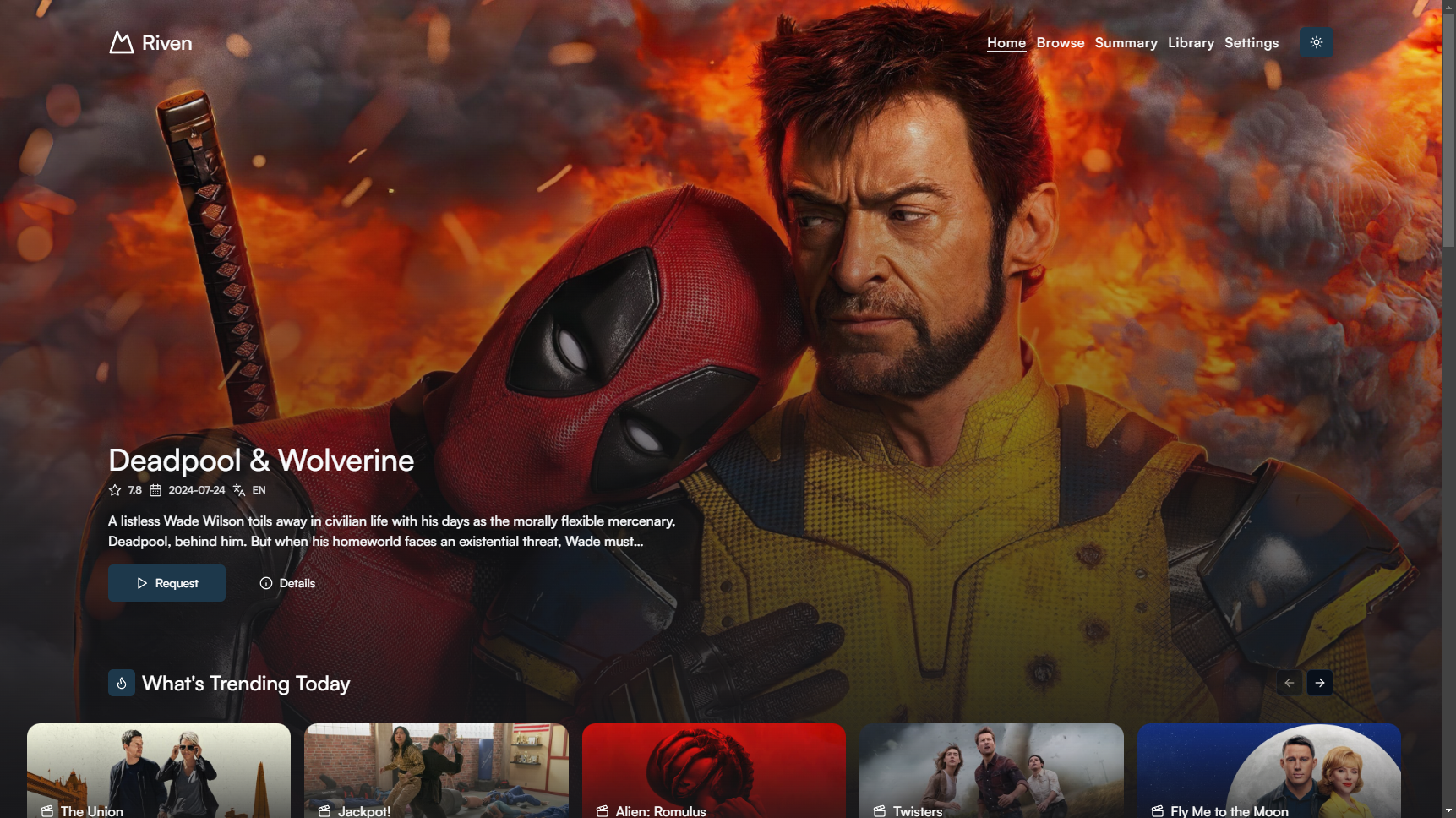
Once you have completed the onboarding process, you will be greeted with a beautiful dashboard where you can manage your media library, request items, settings and many more in the future.