Bug Type (问题类型)
server status (启动/运行异常)
Before submit
Environment (环境信息)
Expected & Actual behavior (期望与实际表现)
Expected. The time a Server container is allowed to spend starting should be something the deployment can set. Under Kubernetes the orchestrator already owns that budget through the startup probe, so the container should not enforce a shorter one of its own, or should at least let the budget be raised.
Actual. hugegraph-server/hugegraph-dist/docker/docker-entrypoint.sh line 220 runs
./bin/start-hugegraph.sh -j "${JAVA_OPTS:-}" -t 120-t sets SERVER_STARTUP_TIMEOUT_S in start-hugegraph.sh (script default 30), and when it expires the script prints Starting HugeGraphServer failed and exits 1, which ends the container. The 120 is a literal in the entrypoint; no environment variable or argument reaches it.
Measured on 2026-09-01: 2 of 6 Server starts across two independent installs terminated this way, each after exactly 24 five-second polls, exit code 1, then recovered on the next restart. The dying container's log both times:
Connecting to HugeGraphServer (http://0.0.0.0:8080/graphs).Using G1GC ...
........................Starting HugeGraphServer failed
The Helm chart gives the Server a 450-second startup budget (startupProbe failureThreshold 90 x periodSeconds 5), sized for wait-storage.sh plus JVM start on a loaded node. That budget is unreachable: the process is gone at 120 seconds, 27 percent of it, and no probe setting can extend a process that terminates itself first.
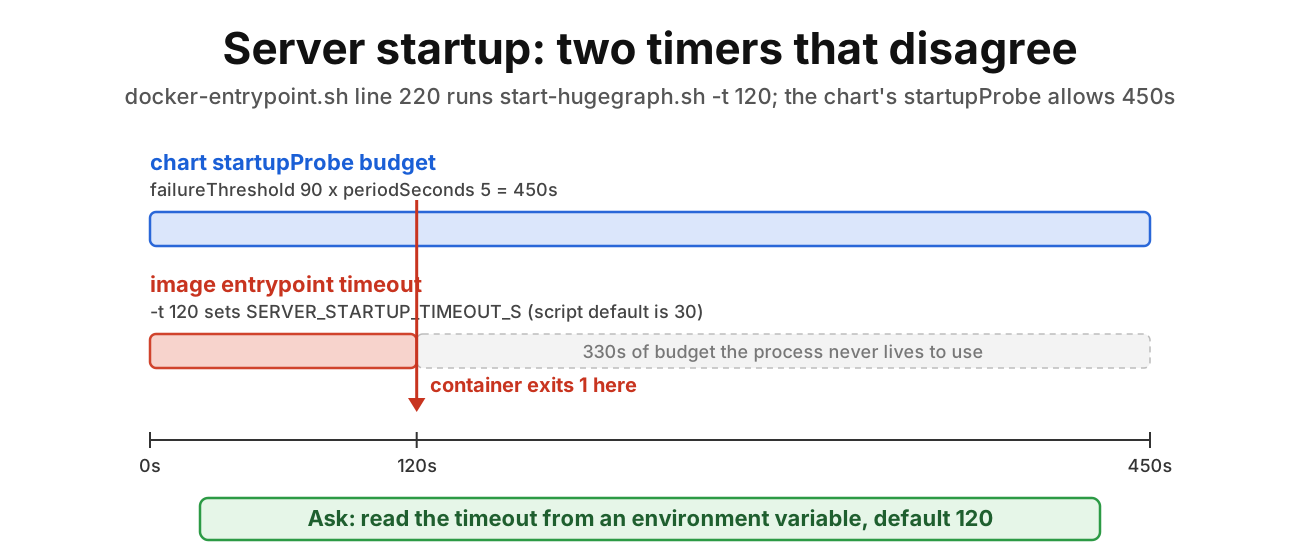
The cost today is a slow first start, not data: the container restarts and the second attempt usually succeeds because init-store has already written its marker. On a slow or contended host it can take several restarts, and every one of them looks like a crash loop to whoever is watching the rollout.
Proposal
Read the timeout from the environment, defaulting to the current value so nothing changes for anyone who does not set it:
./bin/start-hugegraph.sh -j "${JAVA_OPTS:-}" -t "${HG_SERVER_STARTUP_TIMEOUT_S:-120}"and document HG_SERVER_STARTUP_TIMEOUT_S next to the other HG_SERVER_* variables in docker/README.md. The Helm chart would then set it from the same value that sizes the startup probe, so the two timers cannot disagree. Happy to send the PR.
Related
Bug Type (问题类型)
server status (启动/运行异常)
Before submit
Environment (环境信息)
hugegraph/server:latestimage built from it; the line is unchanged since refactor(docker): migrate single-node compose from host to bridge networking #2952 (0154c06, 2026-03-20)Expected & Actual behavior (期望与实际表现)
Expected. The time a Server container is allowed to spend starting should be something the deployment can set. Under Kubernetes the orchestrator already owns that budget through the startup probe, so the container should not enforce a shorter one of its own, or should at least let the budget be raised.
Actual.
hugegraph-server/hugegraph-dist/docker/docker-entrypoint.shline 220 runs./bin/start-hugegraph.sh -j "${JAVA_OPTS:-}" -t 120-tsetsSERVER_STARTUP_TIMEOUT_Sinstart-hugegraph.sh(script default 30), and when it expires the script printsStarting HugeGraphServer failedand exits 1, which ends the container. The 120 is a literal in the entrypoint; no environment variable or argument reaches it.Measured on 2026-09-01: 2 of 6 Server starts across two independent installs terminated this way, each after exactly 24 five-second polls, exit code 1, then recovered on the next restart. The dying container's log both times:
The Helm chart gives the Server a 450-second startup budget (
startupProbefailureThreshold 90 x periodSeconds 5), sized forwait-storage.shplus JVM start on a loaded node. That budget is unreachable: the process is gone at 120 seconds, 27 percent of it, and no probe setting can extend a process that terminates itself first.The cost today is a slow first start, not data: the container restarts and the second attempt usually succeeds because
init-storehas already written its marker. On a slow or contended host it can take several restarts, and every one of them looks like a crash loop to whoever is watching the rollout.Proposal
Read the timeout from the environment, defaulting to the current value so nothing changes for anyone who does not set it:
and document
HG_SERVER_STARTUP_TIMEOUT_Snext to the otherHG_SERVER_*variables indocker/README.md. The Helm chart would then set it from the same value that sizes the startup probe, so the two timers cannot disagree. Happy to send the PR.Related
-t 120line while moving the compose setup to bridge networking.